News from PolluxPollux goes Diamond… and among other things, Pollux Publishing, our new open access publication service, which we are developing in cooperation with Heidelberg University Library, is coming soon. We are delighted to announce that we have already secured our first journal for Pollux Publishing. More information will follow in the near future on our website and social media channels. With Pollux Publishing, we offer publishers the opportunity to publish their political science journals in non-commercial Diamond Open Access. In Diamond Open Access, there are no publication fees for authors, and publishers retain control over content and review procedures. In addition, as a science-led political science publication platform, Pollux Publishing ensures long-term preservation and availability via persistent identifiers, thus supporting scientific sovereignty and sustainability. Last but not least, with Pollux Publishing, we are responding to the demands of research funders to encourage an open science culture in political science. If you publish a political science journal or are planning to launch a new one and are interested in Pollux Publishing, please feel free to contact us. We can advise you on technical issues and financial matters and explore potential areas of cooperation together. Contact: open-access@pollux-fid.de |
|
For more quality in research evaluationMarcel Wrzesinski discusses common practices in research evaluation in the DVPW blog (German). He shows that although bibliometric indicators such as the Journal Impact Factor (JIF) can be used to measure scope, but direct conclusions about the quality of publications based on this indicator should be viewed critically. The common indicators are based on intransparent and incomplete data sets from providers who pursue commercial interests. Wrzesinski highlights international initiatives to reform research evaluation and advocates approaches that combine quantitative and qualitative methods. This article is based on Marcel Wrzesinski's presentation on 24 September 2024 at the 29th Scientific Convention of the DVPW in Göttingen. |
|
More parliament, more analysis: the new PoliCorpWe have updated PoliCorp, the analysis tool for structured political text collections, and are delighted to announce the following new features: New dataset: StateParl
StateParl contains parliamentary speeches by members of parliament and government representatives from all 16 German state parliaments between 1 January 2000 and 31 December 2023. The dataset is based on raw data from the StateParl project and contains 1.739.735 processed speeches. GERMAPARL+ expanded with data from legislative period 21
GERMAPARL+ comprises the official protocols of plenary debates published by the German Bundestag, spanning 76 years of parliamentary discourse since 7 September 1949. Raw data up to 7 September 2021 comes from the GermaParl corpus, a comprehensive linguistic dataset created by the PolMine project. GermaParl covers transcripts of parliamentary debates from 7 September 1949 to 7 September 2021 and comprises 958.100 speech contributions. Speeches after 7 September 2021 were taken from the Bundestag Open Data Project. Improved advanced search
New drop-down fields with predefined values have been added to several advanced search options, making searches easier, faster and more intuitive.
PoliCorp is available for trial at Pollux Political Corpora (PoliCorp). |
|
|
Webinar: February 10th, 11 a.m. [English] Open Political Corpora. Structured search and analysis of political text collections with PoliCorpOn February 10th 2026, at 11 a.m., we are offering a webinar on PoliCorp covering the following topics: - Accessing and working with open political corpora
- Key features and use cases
- Practical demonstrations for research and analysis
The event is intended for researchers, students and anyone interested in political text analysis. The webinar will be in English and participation is free of charge. |
|
|
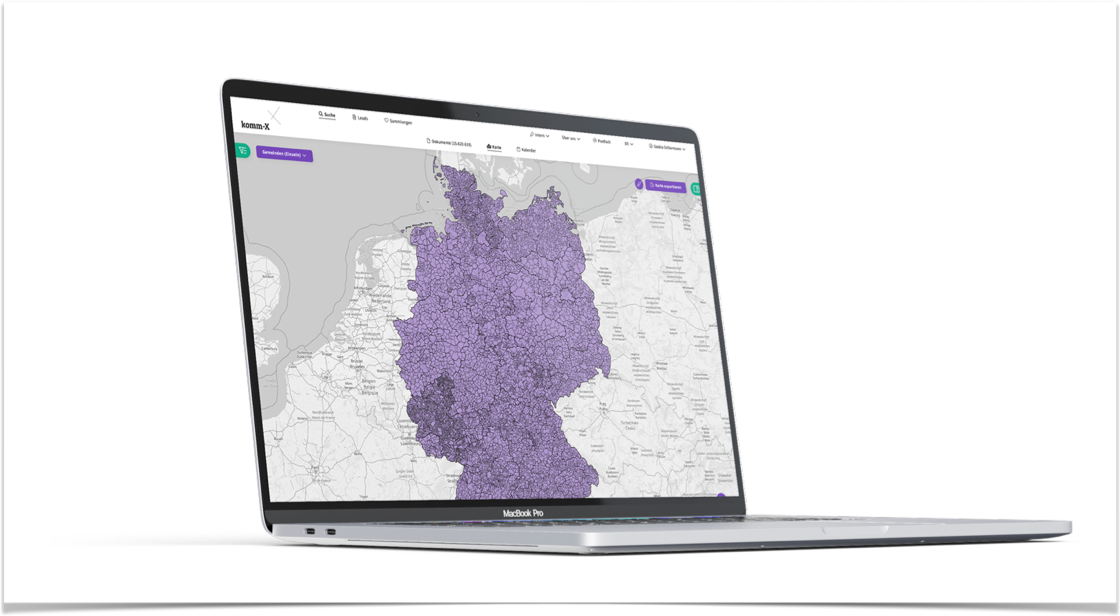
Webinar: February 24th, 12 p.m. [German] Municipal policy monitoring with Komm-XFor several years, Pollux has been offering political scientists in Germany free access to the Polit-X political monitoring and analysis database. Now there is a new database: Komm-X. Komm-X operates at the local government level. This tool can be used to monitor publications by local authorities, districts and independent cities. Political processes are often carried out and implemented at the local level. |
|
On February 24th 2026, at 12 p.m., we are offering a webinar to introduce Komm-X and explore how the database can be a useful tool in your political science research. There will be plenty of time for questions and comments at the end of the webinar. The Webinar will be in German and participation is free of charge. |
|
|
Open ScienceTranscript Open Library Political Science |
|
The "Transcript Open Library Political Science" will continue in 2026 with Pollux as its main sponsor. A total of 43 academic institutions from Germany, Austria and Switzerland have contributed to the financing of open access for 17 new publications from the political science programme. In the summer of 2026, transcript will additionally publish 17 backlist titles from the programme area in open access at its own expense. This will break the 400 open access titles mark in political science. |
|
Why the Verfassungsblog deserves our supportThe Verfassungsblog is a central platform for scientifically based analyses of current constitutional and democratic theory issues. It offers high-quality contributions from the fields of law and political science. Donations secure the editorial work, enable international perspectives and keep all contributions freely accessible. Pollux has been supporting the Verfassungsblog since 2022 – and every additional donation helps to preserve this valuable public forum for discourse in the long term: |
|