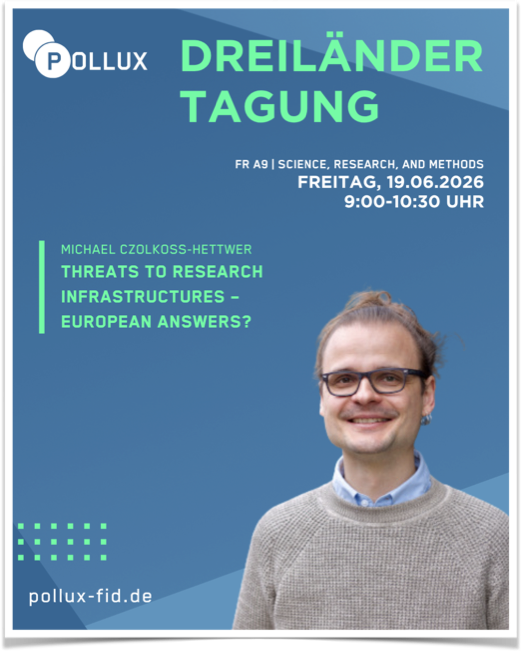
News from PolluxPollux goes DreiländertagungOn Friday, June 19th, from 9:00 to 10:30 am, our project coordinator Michael Czolkoß-Hettwer will speak on the following topic during the panel session Fr A9 | Science, Research, and Methods at the Dreiländertagung: Threats to research infrastructures – European answers? Well-functioning research infrastructures are a fundamental condition for conducting research in everyday practice and for ensuring academic freedom. Two developments threaten the integrity and effectiveness of research infrastructures on a global scale: - the rise of authoritarian movements and governments, and
- the increasing market concentration of commercial enterprises in the research infrastructure sector.
The talk will highlight how this threat manifests itself. Building on this, potential solutions at the European level will be presented. The focus will be on the systemic factors that hinder the establishment of alternative, non-commercial research infrastructures. |
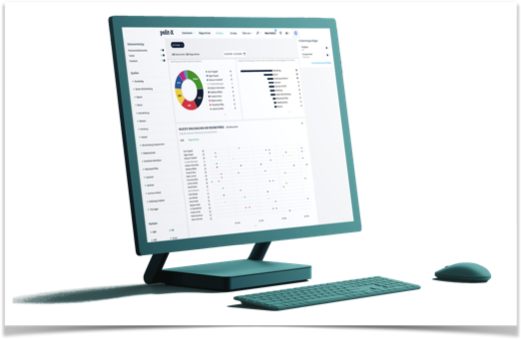
The lecture will be held in English. | | "Wild gewordener Gartenzwerg!" Calls to order in the German BundestagIn our latest DVPW blog post, our project researcher Nina Smirnova presents her study, which systematically examines calls to order in the Bundestag over a period of 72 years (in German only). The data was drawn from the GermaParl corpus, which was systematically searched using our text analysis tool PoliCorp. Personal insults are sanctioned particularly frequently, with opposition politicians and male MPs being affected more often. Overall, the results suggest that, despite formal rules, calls to order are not entirely objective, but are also shaped by parliamentary dynamics and the chairing of the session. There’s also a poster summarising this briefly: https://doi.org/10.5281/zenodo.20442698 This post is based on: https://arxiv.org/abs/2603.26430 | | Online-Workshop: July 14th 2026, 1:00 AM – 12:00 PM Code & Politics. Practical Python workflows for analysing parliamentary debates in PoliCorpHow can data from PoliCorp be effectively evaluated and used for academic analysis? In this workshop, we will demonstrate how data from PoliCorp can be processed, analysed and visualised using Python. Participants will gain practical insight into typical data analysis procedures and learn how to systematically examine political texts and corpora. The workshop is aimed in particular at political science researchers and students, as well as anyone interested in working with PoliCorp data. Basic knowledge of Python or another object-oriented programming language is an advantage but not essential. To ensure the workshop is tailored as closely as possible to participants’ needs, we would appreciate your participation in our short survey (4 questions). Your feedback will help us to tailor the content, focus and level of the workshop appropriately. | | The event will be held in English. | | | Webinar: July 2nd 2026, 12 PM Politikmonitoring und -analyse mit Polit-XIn collaboration with Polit-X, we are once again offering a 45-minute introductory webinar on Polit-X on July 2nd 2026 at 12 noon. We will demonstrate how to search through millions of up-to-date political documents at federal, state and European level, as well as the analysis options for political topics, tracking processes and the use of the new AI chat assistant. There will be plenty of time for your questions at the end of the webinar. We look forward to your participation! |
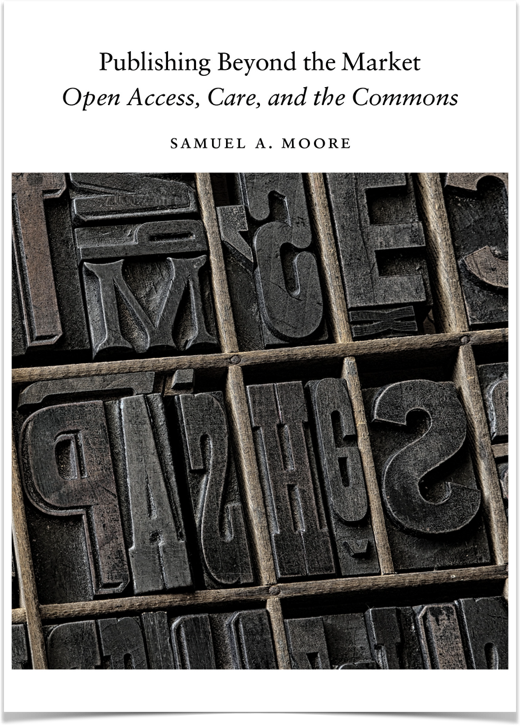
Participation is free. To use Polit-X, you need a PLUS account at Pollux. | | | Open Science. For an open political scienceBook review on Portal für PolitikwissenschaftIn his book Publishing Beyond the Market, Samuel A. Moore offers a fascinating insight into the history and current state of the open access movement. His central argument is compelling: the open access business models that currently dominate follow a neoliberal logic – with the major international publishers, such as Elsevier, being the primary beneficiaries. If we truly wish to establish scholar-led and non-commercial open access models, we must not view the issue as a purely technical one and, above all, we must not focus solely on ‘output’ (i.e. the growth in the proportion of OA publications). What is important is a publication infrastructure tailored to the needs of the academic community. We would like to thank the Portal for Political Science for the opportunity to highlight the topic of Open Access there. (German only). |
Samuel A. Moore. Publishing Beyond the Market. Open Access, Care, and the Commons. University of Michigan Press, September 2025. Paperback : 9780472057634 , Open Access : 9780472905225. DOI: https://doi.org/10.3998/mpub.11781635 |
| | | | Contributions at Conferences and Events | | 12.05.2026 | Webinar: Introduction to Polit-X |
|---|
| 21.05.2026 | News from Pollux. Joint session organised by the FID Media, Sociology and Political Science. → BiblioCon2026, Berlin |
|---|
| 10.03.2026 | Academic blogs & Pollux. Online Workshop: Methods for preserving academic blogs |
|---|
| 12.06.2026 | Diamond Open Access as a core task of the FID Political Science. → FID Coffee Lecture |
|---|
|
|