









Tooltipp: QualiAnon
Enables DSGVO-compliant anonymization, whereby case contexts are retained and secure export functions enable separate storage.
Pollux - the specialized information service for political science supports political science researchers in managing their research data. On this page you will find a practical overview with subject-specific information, links and advice on services relating to research data management (RDM).
Further information on general and particularly political science aspects of research data management are available on the portal forschungsdaten.info (mainly German).
Additional resources for political science researchers are the research data centre Qualiservice for qualitative research data, GESIS – Leibniz Institute for the Social Sciences for quantitative research data as well as KonsortSWD – NFDI4Society of the National Research Data Infrastructure (NFDI).
Information Services
Advice & Development
Data Publication
Provide Evidence of Research Data
Qualitative and quantitative political science research data are directly indexed in Pollux.
Networking
Mediation between the political scientists and KonsortSWD – NFDI4Society
Research data is a central aspect of scientific work and is worth being handled carefully. Research data management (RDM) means organising research data systematically, documenting it in a transparent manner, securing it in the long term and - if possible - making it available for reuse.
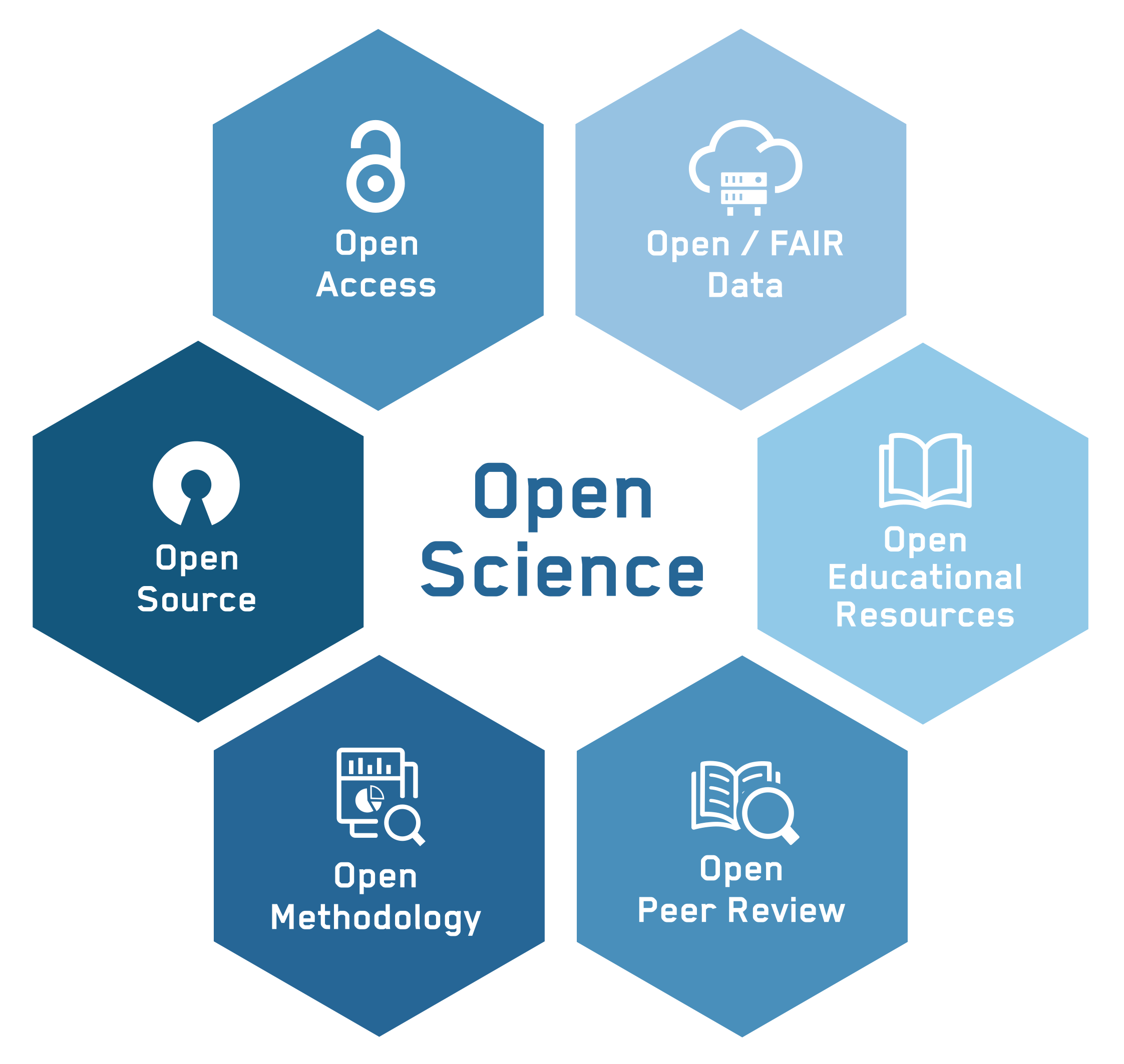
Sustainable research data management is based on the so-called "FAIR principles". According to these principles, research data should be Findable, Accessible, Interoperable and Reusable. FAIR and open research data are a central element of transparent science. Together with other elements such as free access to research results (open access), these components are summarised under the term open science (see Figure 1).
The German Political Science Association (DVPW) is also committed to Open Science and Open Access in its statement and emphasises that these encourage the quality of research.
Transparency and Comprehensibility
RDM makes research verifiable and intersubjectively comprehensible. It not only documents the collected data, but also the research methodological steps and the context of the research for better comprehensibility.
Recognition and Visibility
Research data are part of scientific achievement. Only by publishing research data can it be cited and made measurable as a scientific output. This also increases the visibility of one's own research.
Long-term Securing
Structured handling of research data protects against data loss - even beyond the duration of the project.
Enable Secondary Use
Research data is not a ‘“single-use product’”, but offers great potential for new research questions. FAIR RDM creates the conditions for meaningful secondary use.
Good Scientific Practice
The Guidelines for Securing Good Scientific Practice of the German Research Foundation (DFG) describe appropriate standards for scientific work. Recommendation 17 emphasises the preservation and publication of research data.
Funding Conditions and Institutional Requirements
Many research funders expect research data to be handled transparently, often in the form of a data management plan. Many universities and research institutions have now also established corresponding recommendations and policies.
In political science research, there are a variety of research data and survey methods used. Both quantitative and qualitative research data and their combination in mixed-method studies is relevant. This wide range brings with it a variety of specific requirements for RDM. It is therefore helpful to become familiar with suitable tools, services and contact points at an early stage.
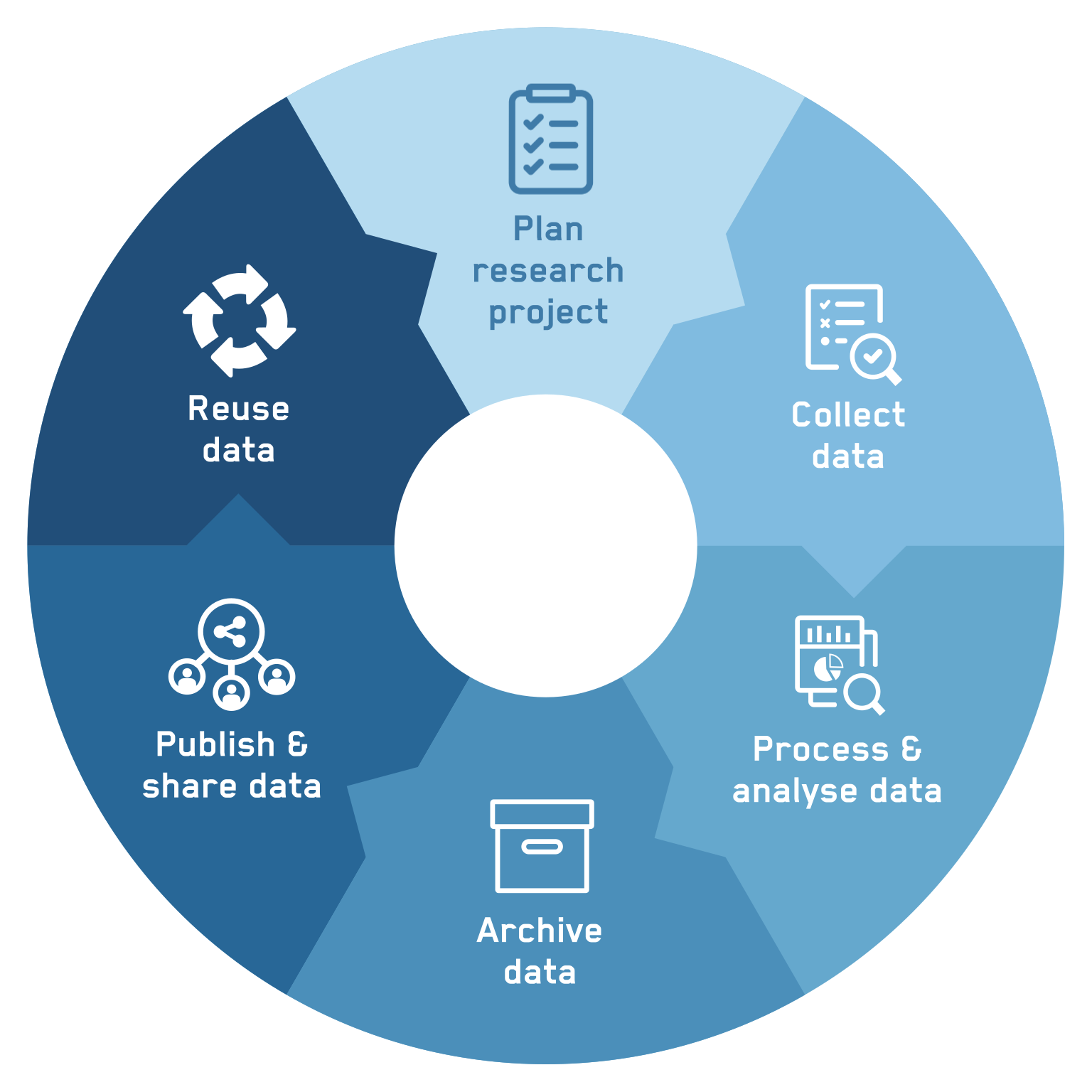
Can you reuse data that has already been collected for your research project? Here you will find a selection of resources where you can search for relevant research data for scientific re-use:
RDM should already be included in the project planning and before the start of data collection. The handout on „Research data management in the social, behavioural and economic sciences“ published by RatSWD, which summarises basic information for data-generating and data-using research projects, provides guidance. A handout is also available for small projects.
It is also important to inform research data centres about the planned use of data at an early stage in order to realistically assess the effort needed for RDM measures. Possible archives for your research data can be the discipline- and method-specific research data centres listed above as well as interdisciplinary repositories at your university. The preservation of research data is eligible for funding from many research funding organisations such as the DFG, but must usually be included in the project proposal. Research data centres can help you with the calculation. According to a statement by the DFG Review Board 111 (sociology, political science, communication science), the re-usability (publication) of research data is not a mandatory requirement for eligibility for funding. However, especially if there is no intention to archive data, this should be well justified in the funding proposal.
It is generally recommended to draw up a data management plan (DMP) for research projects. This is often mandatory in third-part funded projects. A DMP describes how research data is to be collected, stored, documented, maintained, processed, passed on, published and archived in the project. It also sets out which resources are required, which legal framework conditions apply and how responsibilities are defined. The DMP should be kept up to date throughout the entire duration of the project. Various interdisciplinary tools and templates can be used to create a DMP (some are listed here), and the STAMP can also be used in political science projects.
When collecting data, it is important to document all research steps in the best possible way. Documenting and processing the data as completely as possible is essential in order to be able to understand the methodological approach, the research process and the results. Good documentation includes not only technical aspects such as the file formats or software versions used, but also descriptions of the research questions, the survey design, the data selection process, field access and the contextual conditions of the survey. The data documentation should take place in parallel with the data collection and be continued throughout the process.
The documentation requirements vary depending on the method used, the collected data and the research project. In the case of quantitative surveys, for example in addition to the survey questionnaire itself, the codebook used also provides important explanations of the research data. A handout from the Verbunds Forschungsdaten Bildung summarises important aspects for the preparation of quantitative data. With regard to qualitative research data, the so-called “contextualisation” of the data is essential. Methodological, institutional and thematic contexts can be relevant here. This includes contextual materials such as the project proposal, the interview guidelines or memos. Qualiservice has published a corresponding handout on the contextualisation of qualitative research data for reuse.
In political science, personal data is often collected, e.g. as part of interviews or surveys. This data must be specially protected in accordance with the General Data Protection Regulation (GDPR) and ethical standards. The central requirements here are:
Informed Consent
In order to comply with data protection regulations, the written consent of the research participants to take part in the study is required after they have been informed about the study. This consent is given by means of informed consent. Qualiservice provides sample templates (in German) for this purpose. Further information can be found in the handout. In addition, Qualiservice advises researchers on questions regarding written informed consent and possible alternatives. The Research Data Network Education also offers sample formulations. In special cases such as telephone and online surveys or research with illiterate people or children, special conditions must be observed. The GDPR also applies without restriction to the processing of data in commissioned surveys and omnibus surveys.
Pseudonymisation and Anonymisation
Personal data can either be completely anonymised or pseudonymised in order to exclude or strongly restrict identifiability. The necessary anonymisation strategies vary depending on the research design. For example public figures such as politicians are more easily recognisable than others, even through indirect identifiers. The degree of anonymisation therefore always depends on the population and the benefits of the research. It is important to document the changes in the data. For the anonymisation of quantitative data, the so-called "k-anonymity" can be a useful method. For qualitative data, the Qualiservice handout "Guideline on the anonymization and pseudonymization of qualitative data" (German only) provides detailed information and suggestions for GDPR-compliant processing. The QualiAnon tool can also be helpful. It allows GDPR-compliant anonymisation, whereby case contexts are preserved and secure export functions make separate storage possible.
Particular care is required in sensitive research fields - such as political extremism, sexualized violence or mental illness. The focus here is on anonymisation, data protection, informed consent and the protection of participants. A handout from RatSWD (German only) provides guidance on how to deal with knowledge of criminal offences in a research context.
The handling of data from indigenous and marginalised groups also requires careful ethical reflection. The CARE principles (Collective benefit, Authority to control, Responsibility, Ethics) complement the FAIR criteria and emphasise respect for the rights and interests of indigenous communities in the context of data management and use.
In addition, ethics codes from professional associations, such as the German Political Science Association (DVPW), sensitise researchers to the ethical handling of research data.
For research projects involving sensitive data, an ethics vote by an ethics committee may be required to ensure responsible data archiving and guarantee funding opportunities. The DFG has provided information on this for the humanities and social sciences. An overview of social and economic science ethics committees can be found on the RatSWD website.